
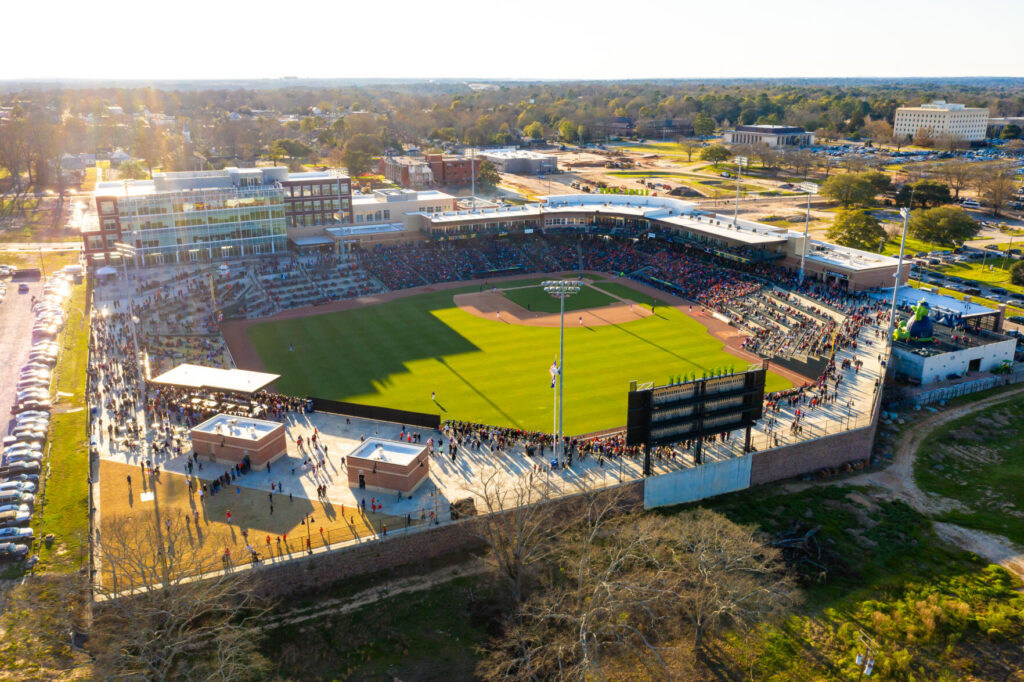
When the Columbia Fireflies relocated to the BullStreet District from Savannah in 2016, they opened their inaugural season in the newly-constructed Segra Park — surrounded by dirt roads and crumbling buildings.
Ten years ago, the BullStreet District was barely more than a vision. Greenville-based Hughes Development Corporation planned to transform the 181-acre campus, which is the former home of the South Carolina State Hospital, into a bustling mixed-use neighborhood.
The Fireflies and their brand-new ballpark were the pioneers of that vision.
Growth of the Fireflies
The construction of Segra Park marked the start of BullStreet’s massive redevelopment, and the park has been in operation since 2016. Though awarded ballpark of the decade, when it opened, Segra Park lacked the infrastructure and other attractions that surround it today.
Jack Bradshaw/Staff
Jason Freier, the managing owner of the Fireflies, said being “out there on our own” posed challenges in the first few seasons. The unpaved roads and parking lots, poor lighting, and dilapidated buildings around the park made some fans to feel unsafe. The road leading to Segra Park, Freed Street, was only paved in 2019, during the Fireflies’ fourth season.
Freier said the road’s benefits weren’t immediately apparent, as the following two seasons were impacted by the COVID-19 pandemic, but the developing infrastructure has positively impacted the park and the fan experience.
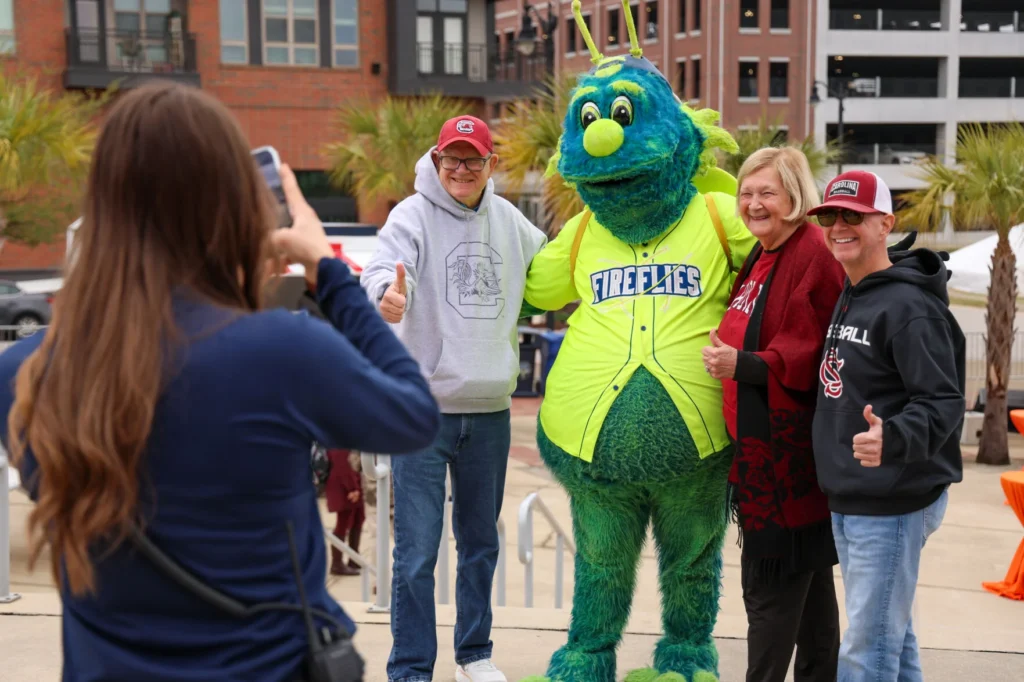
A decade into development, Freier said a “symbiotic effect” has taken shape between the Fireflies and the BullStreet District. The district’s mixed-use developments, including retail, residential, dining and office spaces, have promoted more community engagement within Segra Park’s walls.
“Having the residential on the site, it makes it into a real neighborhood. It gives you a 24-hour environment,” Freier said. “You add that to the retail and the ballpark, which are promoting foot traffic … all these pieces work together.”
Fireflies Team President Brad Shank said BullStreet’s mixed-use characteristics motivate the Fireflies to provide more non-baseball game events — like the annual July 4 event with the SC Philharmonic and the yuletide seasonal light show — which support BullStreet businesses and provide year-round entertainment for residents.
“We really want to create that live-work-play environment where … hopefully people can just have it all here,” Shank said.
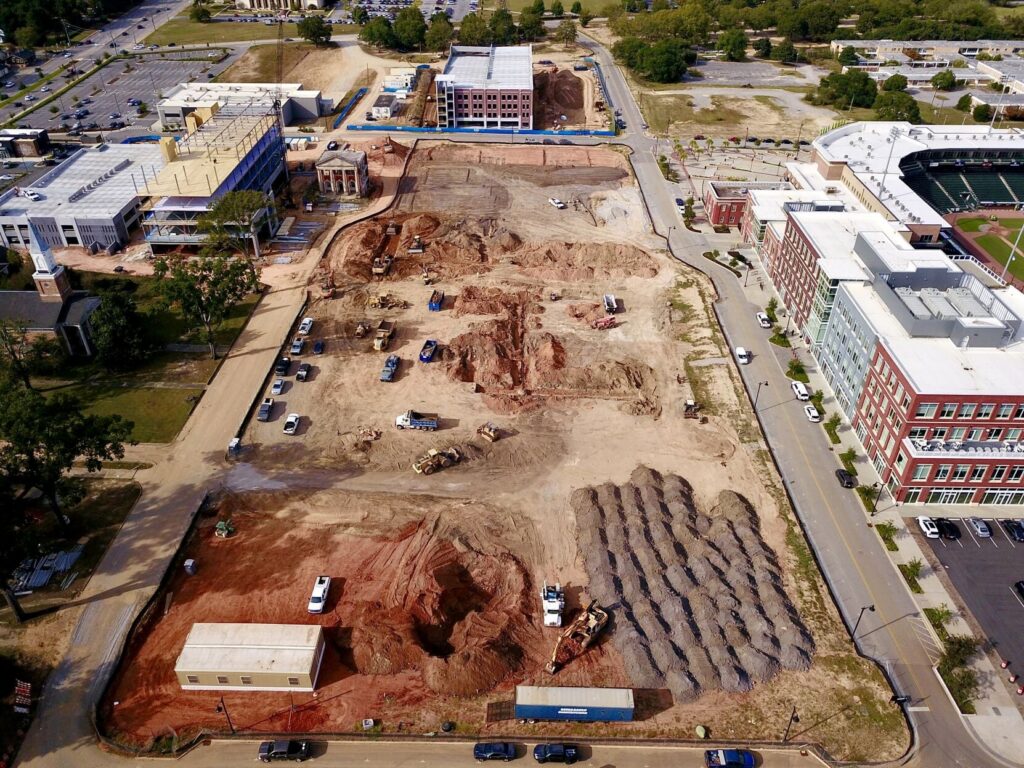
As BullStreet brings its 20-year plan to life, Shank said the Fireflies will continue collaborating with the development’s businesses.
“We wanted to be at the center of this all when it’s finished. We didn’t build this ballpark for 2016, we built it for 2040 when this whole district is built out around us,” Shank said. “We are the heartbeat of this district.”
In addition to more than 60 regular-season games, the Fireflies also hosted 234 non-game events in 2025. These events, like the Battle at BullStreet and the recent WOW Studio One Theatre & Film Festival, draw crowds beyond baseball fans, Freier said.
Freier said both game and non-game event attendance has grown post-COVID, but the organization has seen acceleration in some areas. In 2025, total Fireflies event attendance — including baseball games — reached almost 335,000.
The 2026 Battle at BullStreet, hosted on Feb. 28 prior to the South Carolina-Clemson baseball game at Segra Park, drew 8,480 attendees, Frier said.
Cayce resident and USC alumna Chelsea Baker said she has been a regular at the Battle at BullStreet for the last few years, and comes for the atmosphere and the South Carolina-Clemson rivalry.
“I think it’s really cool,” she said. “I think it brings more people over, especially in Columbia, and it just exposes people to all that we have here.”
Jack Bradshaw/Staff
The Battle at BullStreet also gave a new area business the opportunity to reach more customers.
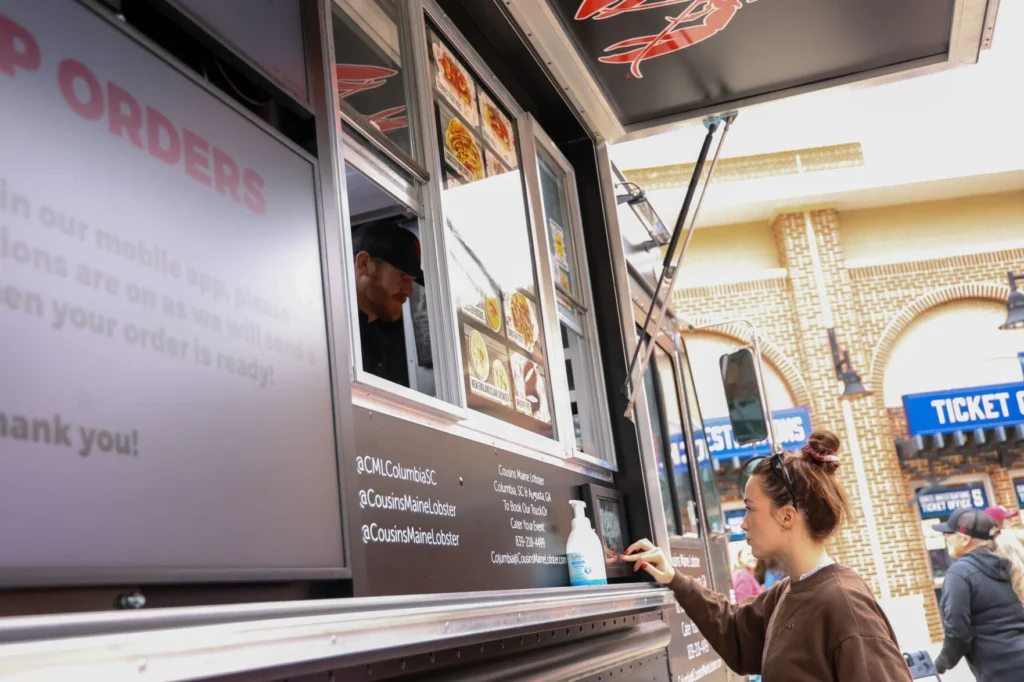
Cousins Maine Lobster held the grand opening of their first South Carolina truck at the event. Cousins Maine Lobster Franchisee Matt Cobb said he hoped to provide a good experience for the fans.
“We really wanted to make a big splash for our grand opening, and I really can’t think of a better event than this for us to do it at,” Cobb said at the Feb. 28 event.
A decade of the BullStreet District
The BullStreet District was imagined long before its groundbreaking in 2015. Greenville-based Hughes Development Corporation purchased the property from the South Carolina Department of Mental Health in late 2010, a decade after the infamous asylum finally closed its doors, and the development agreement outlining the plan for BullStreet was completed in 2013.
Now over halfway into the 20-year plan, 21 projects, including apartments, restaurants, offices and event venues, stand completed on the BullStreet campus. Projects planned or under construction include more restaurants, a Publix and the University of South Carolina’s Health Science campus.
Chandler Cox, Hughes Development Corporation’s director of commercial development and the BullStreet District project manager, said BullStreet aims to serve as much of the Columbia community as possible.
“Columbia is a really cool and unique city where there are all these different pockets of neighborhoods,” Cox said. “BullStreet is trying to create its own neighborhood within the larger fabric of the community, and a lot of that has to do with the ability to stay in one location.”
Jack Bradshaw/Staff
The neighborhood’s infrastructure also promotes social and technological connectivity. Commercial fiber company Segra provides high-speed, fiber-optic internet infrastructure to the retail and commercial spaces in BullStreet, creating a “gigabit community” for the district.
Segra Regional Vice President of Sales Chris Knierim said the infrastructure, which has been built to accommodate future construction in the neighborhood, has helped attract large retailers and businesses.
“It really compares to other cities that are developing, and putting Columbia on that map,” said Patrick Alsup, Segra’s senior director of marketing.
From the beginning, the presence of a minor league baseball team was always a consideration and part of the plan for the neighborhood, Cox said. Because of this, there is a “great synergy” between the Fireflies and the BullStreet District.
The stadium’s non-game events and growing presence of local businesses in the neighborhood work together to bring more tourists to the area, Cox said. She cited the newly-opened Gather Cola and the Fireflies’ annual Holiday Lights show as an example of this collaboration. The Holiday Lights drew 41,651 attendees in 2024, and 57,849 in 2025, concurrent with Gather Cola’s opening.
Likewise, Shank and the Fireflies hope to remain the centerpiece of the BullStreet District, while continuing to support the neighborhood’s businesses as the district evolves.
“It’s about something way bigger than a ballpark and a baseball team,” he said. “It’s about, ‘how can we continue to help this district grow?’”